%20(1).png)


Difference Between 1kW, 3kW, and 5kW Solar Systems -Which One Fits Your Home?
Introduction
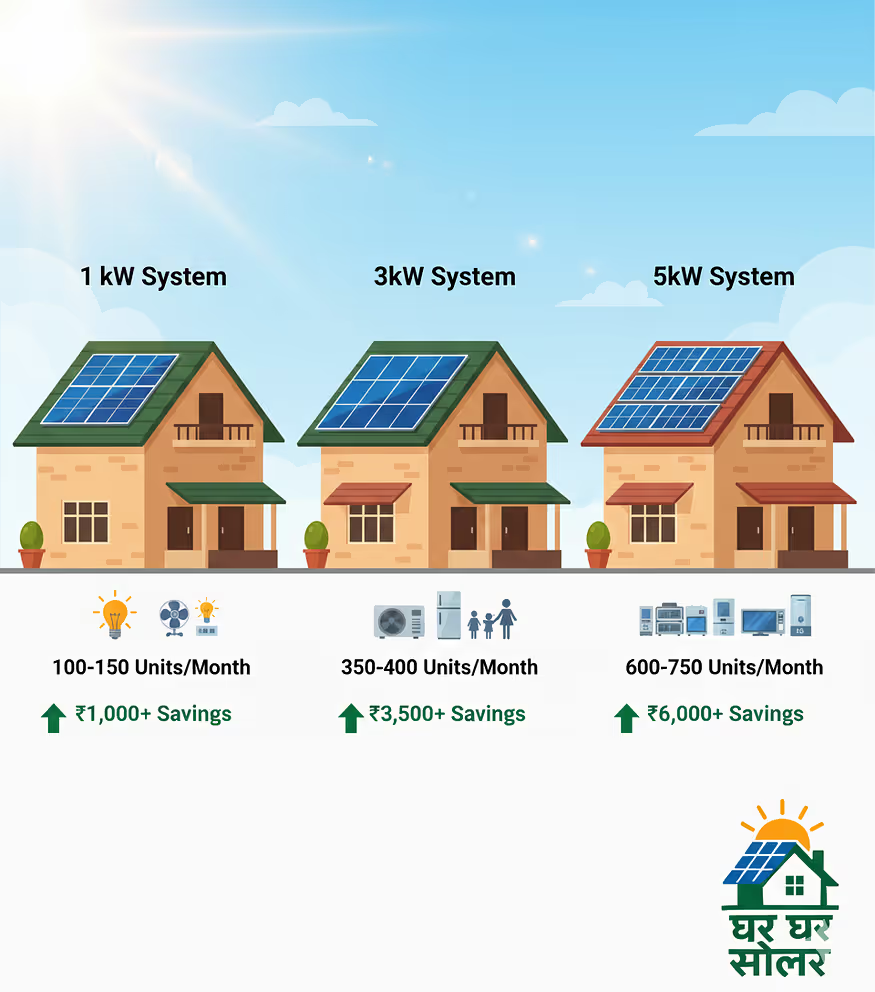
Solar adoption in India has skyrocketed over the past few years, especially in the residential rooftop sector. With rising electricity bills, frequent power cuts, and government-backed subsidies under national programs, more families are now exploring solar as a practical and permanent solution.
But the most common question homeowners ask is simple:
“Which solar system capacity should I install — 1kW, 3kW, or 5kW?”
Choosing the right system size is not just about budget. It impacts:
- How much electricity your home can run on solar
- How fast you recover your investment
- Whether your subsidy eligibility fits the system
- How often you rely on grid power
- How much you save every month
A well-sized system gives you uninterrupted power and long-term savings.
A poorly sized system can lead to slow returns, dependency on the grid, or even a failed subsidy application.
This guide breaks down the difference between 1kW, 3kW, and 5kW solar systems in a clear, practical, and deeply detailed manner. You’ll understand how each system performs, who it is ideal for, and how to choose the perfect match for your home.
Understanding Solar System Capacity in Simple Terms
Before comparing 1kW, 3kW, and 5kW systems, let’s simplify the basics.
What Does “kW” Mean in Solar?
kW (kilowatt) is the measure of your solar system’s capacity.
It tells you how much power your solar panels can generate at peak sunlight.
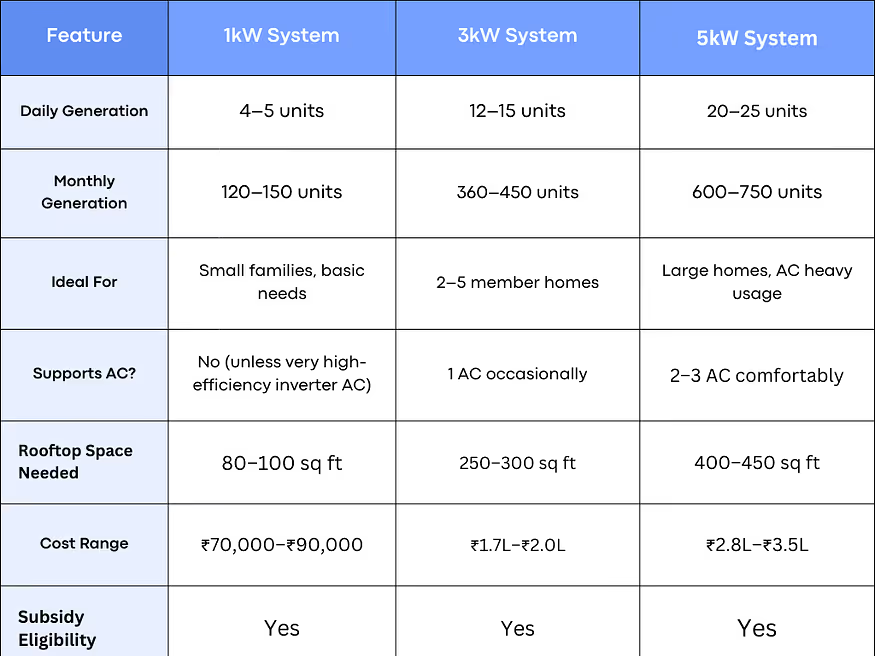
- A 1kW system generates around 4–5 units per day.
- A 3kW system generates around 12–15 units per day.
- A 5kW system generates around 20–25 units per day.
Units = kilowatt-hour (kWh) = what your electricity bill shows.
So if your home consumes about 300 units monthly, a 3kW solar system will mostly cover it.
Key Components That Make Up a Solar System
Regardless of system size, all residential systems include:
- Solar panels
- Inverter
- Mounting structure
- AC/DC cables
- DCDB, ACDB, MCB, surge protection devices
- Earthing and lightning arresting
- Net meter connection
- Safety and monitoring system
Higher system sizes simply mean more panels + a bigger inverter.
Why Choosing the Correct Solar Capacity Matters
Choosing a system that is too small or too large leads to long-term issues.
If You Install a System Too Small
You may face:
- Insufficient power for your home
- Frequent dependency on grid electricity
- Lower savings
- Slow ROI
- Difficulty in adding heavy appliances later
- Wastage of subsidy opportunity
Example:
A family planning to buy ACs in the next 2 years should not install a 1kW system.
If You Install a System Too Large
You may face:
- Higher upfront cost
- Unused generation
- Possibility of reduced subsidy benefit
- Space issues on your rooftop
- Overloading the sanctioned load in some DISCOM jurisdictions
Always size your system based on your present + near-future needs.
How GharGharSolar Helps Homeowners Avoid the Wrong Size
A good installer plays a key role in sizing. Companies like GharGharSolar take a structured approach:
- Conducting a detailed load assessment
- Checking sanctioned load and net-meter feasibility
- Understanding family usage patterns
- Reviewing future expansion plans
- Assessing rooftop orientation and shading
- Calculating optimal panel placement
- Estimating daily and monthly generation
- Providing a transparent savings forecast
This ensures you get a system that aligns with your real-life requirements not guesswork or generic recommendations.
Comparison Table — 1kW vs 3kW vs 5kW
Understanding the 1kW Solar System in Depth
A 1kW system is the smallest standard residential rooftop solar setup installed in Indian homes. While compact and affordable, it plays an important role for households with basic electricity needs or limited rooftop space. This section breaks down everything about a 1kW solar system its generation, cost, appliances supported, space requirements, and whether it is the right choice for your home.
How Much Electricity Does a 1kW Solar System Generate?
A 1kW system typically generates:
- 4–5 units per day under normal Indian sunlight
- 120–150 units per month
- 1,400–1,800 units per year
Generation depends on several real-world factors such as:
- Your state (Bihar, UP, Rajasthan, Punjab, and Gujarat get higher sunlight)
- Direction of rooftop (south-facing works best)
- Shading from nearby structures
- Quality of panels and inverter
- Temperature level (extreme heat slightly reduces output)
Even though 1kW is small, when installed properly with high-efficiency panels and correct tilt angle, it becomes a powerful supplement for homes with minimal requirements.
Appliances a 1kW Solar System Can Support
A 1kW system is suitable for running basic household appliances. It cannot support heavy loads like large refrigerators or air conditioners, but it works very well for essential lighting and small electronics.
Typical appliances supported:
- 4–6 LED bulbs
- 2–3 ceiling fans
- 1 LED TV
- 1 Wi-Fi router
- Mobile charging
- Laptop
- Mixer or small kitchen appliances for short durations
- 1 energy-efficient refrigerator (optional, depending on usage pattern)
Appliances it cannot support comfortably:
- Air conditioners
- Water pumps
- Instant geysers
- Microwave ovens
- Larger refrigerators
- Heavy motor loads
If your home heavily depends on cooling appliances or kitchen appliances, 1kW will not be a practical standalone solution.
Ideal Household Type for a 1kW System
A 1kW setup is best suited for:
- Small families with very low power consumption
- One-bedroom homes.
- Students staying in rental homes
- Single-person households
- Homes with minimal appliance usage
- Families looking to reduce basic electricity consumption but still depend on grid power for heavy loads
It is also ideal for homeowners who want to start small and later expand their system capacity over time. Many Indian households begin with a 1kW installation and upgrade to a 2kW or 3kW system after experiencing solar savings.
Rooftop Space Required for a 1kW Solar System
A 1kW system typically requires:
- 80–100 sq ft of shadow-free rooftop space
Space varies depending on:
- Panel wattage (540W panels need fewer units)
- Mounting structure type (elevated structures need slightly more space)
- Tilt angle adjustments (higher tilt requires a bit more clearance)
If your roof has water tanks, dish antennas, or surrounding shade, the usable space may reduce further. This is why professional installers like GharGharSolar always begin with a rooftop survey to measure real available space and design the system layout accordingly.
Cost of a 1kW Solar System in India
Pricing depends on the type of system you install:
1kW On-Grid Solar System Cost
- ₹70,000 — ₹90,000 (approx.)
1kW Hybrid Solar System Cost
- ₹1,00,000 — ₹1,30,000
1kW Off-Grid Solar System Cost
- ₹1,20,000 — ₹1,50,000
(higher due to battery cost)
On-grid is the most common for residential use, especially because subsidies apply only to on-grid systems.
Subsidy on a 1kW Solar System (PM Surya Ghar)
Under the PM Surya Ghar: Muft Bijli Yojana, a 1kW system is eligible for subsidy.
Typical subsidy benefits:
- ₹30,000 subsidy (approx., varies by state and central scheme updates)
Subsidy is credited directly to the homeowner’s bank account after the installation passes inspection.
A trusted EPC company ensures:
- Proper documentation
- Timely DISCOM approvals
- Quality installation that meets government standards
- Smooth subsidy reimbursement
Installers like GharGharSolar make the process seamless because they handle subsidy paperwork end-to-end.
Return on Investment (ROI) Of a 1kW Solar System
Typical ROI:
- 4–6 years
- Savings per month: ₹600–₹900
- Annual savings: ₹7,000–₹10,000
If your electricity tariff is higher (₹8 or more per unit), your payback period becomes even shorter.
Key factors improving ROI:
- South-facing rooftop
- High-efficiency monocrystalline panels
- Minimal shading
- Net metering approval
- Reliable inverter with >97% efficiency
Even as a small system, 1kW often pays for itself surprisingly quickly in high-tariff regions.
Pros and Cons of a 1kW Solar System
Pros
- Lowest installation cost
- Ideal for small homes
- Quickest approval due to small capacity
- Easily expandable
- Requires very little rooftop area
- Helps significantly reduce basic power usage
- Eligible for government subsidy
Cons
- Cannot support heavy appliances
- Not suitable for large families
- Savings are limited compared to 3kW or 5kW
- Electricity usage must be monitored
- No backup unless you choose off-grid/hybrid
Who Should Choose a 1kW Solar System?
Choose a 1kW system if:
- You have very basic electricity usage
- You want the lowest-cost solar entry
- You live in a 1BHK or small house
- You want to understand solar performance before upgrading
- You mostly need solar for lights, fans, and electronics
- Your rooftop space is limited
- You aim to reduce electricity bills but not eliminate them entirely
A 1kW solar setup is perfect for homeowners who want a reliable yet budget-friendly way to move toward clean energy without major changes to their lifestyle.
Understanding the 3kW Solar System in Depth
A 3kW solar system is one of the most popular choices for Indian households because it strikes the perfect balance between affordability, energy generation, and appliance support. It is ideal for medium-sized families, especially those running a few heavy appliances like refrigerators, washing machines, and one air-conditioner occasionally.
Let’s break down everything you need to know about a 3kW solar setup so you can confidently decide whether it fits your home.
How Much Electricity Does a 3kW Solar System Generate?
A 3kW system generates:
- 12–15 units per day
- 360–450 units per month
- 4,500–5,400 units per year
This is enough to reduce the majority of a household’s electricity consumption, especially for 2–5 member families.
Factors affecting generation include:
- Rooftop direction (south-facing gives maximum output)
- Seasonal variations (summer increases generation; monsoon reduces it)
- Shading from nearby buildings or trees
- Inverter efficiency
- Panel type (mono PERC and mono half-cut perform best)
- Ambient temperature
Even during non-ideal weather, a 3kW system consistently produces enough energy to make a noticeable reduction in your monthly bills.
Appliances a 3kW Solar System Can Support
A 3kW system can comfortably power a combination of light, medium, and occasionally heavy loads.
Typical appliances supported:
- 8–12 LED bulbs
- 4–6 ceiling fans
- 1 full-size refrigerator
- 1 LED TV
- Wi-Fi router
- Laptops and charging devices
- Washing machine (regular use)
- Mixer-grinder
- Small kitchen appliances
- Iron (short durations)
- Water purifier
- 0.75–1 ton inverter AC (occasional use)
Heavy appliances supported occasionally:
- 1 ton inverter AC (1–2 hours depending on sunlight)
- Water pump (1 HP)
- Microwave (short usage)
A 3kW system is not designed to run multiple ACs or heavy loads simultaneously, but it significantly reduces dependence on the grid for daily usage.
Ideal Household Type for a 3kW System
A 3kW system is perfect for:
- Homes with 3–5 family members
- 2BHK or 3BHK homes with moderate appliance usage
- Families using 1 refrigerator, 1 washing machine, and 1 AC occasionally
- Households with monthly consumption between 300–500 units
- Homes looking to reduce electricity bills by 70–90%
- Families aiming for long-term savings without over-investing
This capacity fits most Indian middle-class households, which is why 3kW is often the recommended standard for urban and semi-urban regions.
Rooftop Space Required for a 3kW Solar System
A 3kW system typically requires:
- 250–300 sq ft of shadow-free rooftop area
Space requirements depend on:
- Panel size (540W+ panels reduce module count)
- Mounting structure height (higher structures need extra spacing)
- Direction and tilt (optimal tilt maximizes output)
- Roof design (flat roofs require more spacing than sloped roofs)
Before installation, companies like GharGharSolar conduct a complete site survey to measure usable rooftop space and design the most efficient layout.
Cost of a 3kW Solar System in India
The cost varies depending on system type and component selection.
3kW On-Grid Solar System Cost
- ₹1.7 lakh — ₹2 lakh
This is the most common system size installed under government subsidy programs.
3kW Hybrid Solar System Cost
- ₹2.5 lakh — ₹3 lakh
Includes a battery for power backup, ideal for areas with frequent power cuts.
3kW Off-Grid Solar System Cost
- ₹2.8 lakh — ₹3.5 lakh
Batteries increase the cost significantly, but provide complete independence from the grid.
Subsidy on a 3kW Solar System (PM Surya Ghar)
A 3kW system qualifies fully under the current subsidy slabs.
Typical subsidy structure (approx):
- Upto 2kW: ₹30,000 per kW
- 2–3kW: Additional ₹18,000
So for a 3kW system:
- Total Subsidy ≈ ₹78,000
Subsidy is released only after:
- Proper installation
- System inspection by DISCOM
- Net meter approval
Solar companies with end-to-end support like GharGharSolar ensure smooth documentation and approval.
Return on Investment (ROI) Of a 3kW Solar System
Typical ROI:
- 3.5–5 years
- Monthly savings: ₹1,800–₹2,500
- Annual savings: ₹20,000–₹30,000
In states with higher electricity tariffs (₹8–₹10/unit), the ROI is even faster.
A 3kW system is considered the sweet spot for maximum savings with a reasonable investment.
Pros and Cons of a 3kW Solar System
Pros
- Perfect for most Indian families
- Supports moderate to heavy loads
- Best value for money
- Highest subsidy benefit
- Ideal balance between cost and output
- Faster ROI compared to 1kW
- Great for 2BHK and 3BHK homes
- Helps achieve up to 90% savings on bills
Cons
- Not suitable for running multiple ACs full-day
- Requires more roof space than 1kW
- Heavy weather-based variation in monsoon
- Cannot handle high-load motors continuously
Who Should Choose a 3kW Solar System?
Choose a 3kW system if:
- Your monthly electricity bill is ₹1,500–₹3,000
- You run 1 AC occasionally
- You live in a 2BHK or 3BHK home
- Your family has 3–5 members
- You want maximum savings without overspending
- You want quick ROI with significant bill reduction
- You plan to add more appliances in future (3kW allows expansion)
For most Indian homes, 3kW is the ideal balance of performance, savings, and affordability, making it the most popular residential solar capacity.
Understanding the 5kW Solar System in Depth
A 5kW solar system is considered a high-capacity residential setup, suitable for families with multiple appliances and heavier power needs. It is one of the most widely installed capacities under the PM Surya Ghar Yojana for larger homes, thanks to its high electricity generation and excellent long-term savings.
In this section, we’ll break down everything about the 5kW system — generation, appliances supported, monthly savings, ROI, space requirements, pricing, subsidy, pros, cons, and who should choose it.
How Much Electricity Does a 5kW Solar System Generate?
A 5kW system generates:
- 20–25 units per day
- 600–750 units per month
- 7,500–9,000 units per year
This is enough to meet the energy needs of medium-to-large families and significantly reduce or almost eliminate grid dependency.
Generation varies due to:
- Regional sunlight availability
- Rooftop direction and tilt
- Efficiency of inverter and panels
- Dust accumulation on panels
- Shading from neighboring buildings
- Temperature and seasonal cycles
Under ideal installation conditions, many homeowners report even 27–30 units/day during peak summer.
Appliances a 5kW Solar System Can Support
A 5kW solar system can run almost everything in a typical Indian home, including multiple heavy appliances.
Typical appliances supported:
- 12–18 LED bulbs
- 5–8 ceiling fans
- 1–2 full-size refrigerators
- LED TVs
- Water purifier
- Laptops and chargers
- Washing machine
- Mixer-grinder
- Iron
- Microwave (regular usage)
- 1–2 water pumps (1 HP)
Air Conditioners Supported:
A 5kW system can support:
- Two 1-ton inverter ACs
- or One 1.5-ton AC for several hours/day
- or One 2-ton inverter AC
However, actual performance depends on sunlight availability at the time of use. For maximum efficiency, many households run ACs during daytime peak solar hours.
Perfect Fit For Heavy Homes:
A 5kW system is ideal for homes that:
- Use AC frequently
- Have multiple appliances running simultaneously
- Experience high monthly electricity bills
- Want to achieve near-zero electricity charges
For any home with consistent heavy load usage, 5kW is the practical choice.
Ideal Household Type for a 5kW System
A 5kW system is perfectly suited for:
- 4–8 member families
- 3BHK, 4BHK, and duplex homes
- Homes using 1–2 ACs daily
- High-consumption houses (500–900 units/month)
- Homes aiming for maximum savings and minimum grid dependency
- Families planning long-term appliance expansion
- Homes with high tariff zones like Maharashtra, Karnataka, Delhi, and Tamil Nadu
Homes with consistently high electricity bills benefit the most from a 5kW setup because the monthly savings are significantly higher than smaller systems.
Rooftop Space Required for a 5kW Solar System
A 5kW system typically requires:
- 400–450 sq ft of shadow-free rooftop space
Space requirement depends on:
- Panel wattage (latest 540–600W panels reduce required area)
- Direction of panels
- Height of mounting structure
- Number of rows and spacing
- Shade-free area availability
Installers like GharGharSolar conduct detailed site assessments using:
- Laser measurement tools
- Shade analysis
- 3D rooftop modelling
- Panel placement optimization
This ensures maximum power generation even within challenging roof layouts.
Cost of a 5kW Solar System in India
The cost of a 5kW system varies depending on the type of installation:
5kW On-Grid Solar System Cost
- ₹2.8 lakh — ₹3.5 lakh
This is the most common type installed under government subsidy.
5kW Hybrid Solar System Cost
- ₹4 lakh — ₹5.5 lakh
Includes battery backup, suitable for areas with frequent power outages.
5kW Off-Grid Solar System Cost
- ₹4.5 lakh — ₹6 lakh
Best for locations with unreliable grid supply, but batteries increase cost significantly.
Subsidy on a 5kW Solar System (PM Surya Ghar)
Under the PM Surya Ghar scheme:
A 5kW system receives subsidy for:
- Up to 3kW capacity
This means:
- Subsidy = ₹78,000 (approx.)
Even though you install 5kW, subsidy is capped at the 3kW slab.
However, the overall ROI is still excellent because of high monthly bill reduction.
Subsidy workflow includes:
- Registration on the national portal
- Application approval
- Pre-installation inspection (optional in some states)
- Installation by an empaneled vendor
- Net-meter approval
- Final inspection
- Subsidy disbursal to homeowner’s bank account
Companies offering full-service installations simplify this process by handling documentation and approvals on your behalf.
Return on Investment (ROI) Of a 5kW Solar System
A 5kW system provides one of the fastest ROIs for high-consumption homes.
Typical ROI:
- 3–4.5 years
- Monthly savings: ₹3,000–₹5,000
- Annual savings: ₹40,000–₹60,000
For homes with very high consumption (700+ units/month), savings can exceed ₹6,000–₹8,000 per month.
Factors that further boost ROI:
- High electricity tariff (₹8–₹12 per unit)
- South-facing rooftop
- Minimal shading
- High-efficiency monocrystalline panels
- Smart monitoring + preventive maintenance
- Reliable inverter with >97% efficiency
A well-installed 5kW system can deliver substantial financial gains over 25 years.
Pros and Cons of a 5kW Solar System
Pros
- Supports heavy households
- Runs multiple ACs and appliances
- Very high monthly savings
- Excellent ROI
- Suitable for medium and large homes
- Improves home resale value
- Strong performance in high-consumption homes
- Ideal for future expansion
- Net-metering optimizes returned power
Cons
- Higher upfront cost
- Requires larger rooftop area
- No subsidy beyond 3kW
- Performance dips on extremely cloudy days
- Inadequate for homes with more than 2 heavy ACs (unless upgraded further)
Who Should Choose a 5kW Solar System?
Choose a 5kW system if:
- Your monthly electricity bill is ₹3,000–₹8,000
- Your home has 3BHK or larger
- You run 1–2 ACs regularly
- Your family has 5–8 members
- You want to significantly reduce or eliminate your electricity bill
- You expect your power usage to increase in coming years
- Your rooftop has the required free space
- You want a long-term, stable energy solution
If your home consumes over 500 units/month, a 5kW system is almost always the best investment.
Why Many Families Prefer Moving From 3kW to 5kW
Even families who initially consider a 3kW system often decide to upgrade to 5kW because:
- More AC usage
- More appliances added over time
- Higher savings
- Faster ROI
- Bigger subsidy percentage (subsidy capped at 3kW but overall ROI still improves)
- Rising electricity tariff every year
- Net-meter export benefits
For households with growing power needs, 5kW is future-proof and cost-effective.
How to Choose the Right Solar Capacity for Your Home (Step-by-Step Guide)
Choosing between a 1kW, 3kW, and 5kW solar system becomes easy when you understand your electricity usage, appliance load, budget, and roof space. This step-by-step guide simplifies the decision-making process for every type of Indian household.
Step 1: Calculate Your Average Monthly Electricity Consumption
This is the most accurate way to size your solar system.
Check your last 6 electricity bills and note the monthly units (kWh).
Use this simple rule:
- Up to 150 units/month → 1kW
- 300–450 units/month → 3kW
- 500–900 units/month → 5kW
- 900+ units/month → 6kW–10kW (custom sizing needed)
Why this matters:
Solar systems must cover your average consumption not the highest or lowest month.
Step 2: List the Appliances You Use Daily
Solar sizing depends heavily on appliance patterns. Create a list of the appliances your family uses:
- Light-load appliances:Fans, lights, TV, laptop → Suitable for 1kW or 3kW
- Medium-load appliances: Refrigerator, washing machine, iron, mixer → Best for 3kW
- Heavy-load appliances: ACs, water pumps, microwave, geyser → Requires 5kW or more
If you use:
- 0 ACs → 1kW or 3kW
- 1 AC occasionally → 3kW
- 1–2 ACs regularly → 5kW
- 2+ ACs daily → 6kW–10kW
Step 3: Consider Future Power Needs
Many homeowners regret choosing a small system because their needs grow quickly.
Ask yourself:
- Are you planning to buy a new AC?
- Will you add a refrigerator or water pump?
- Do you plan to shift to EV charging in 2–5 years?
- Is your family size increasing?
If the answer is yes to any of these, choose a slightly bigger system (e.g., move from 3kW → 5kW).
Step 4: Check Your Rooftop Space and Sunlight Availability
Approximate rooftop space needed:
- 1kW → 80–100 sq ft
- 3kW → 250–300 sq ft
- 5kW → 400–450 sq ft
Other factors:
- Shading from nearby trees/buildings
- Panel direction (south-facing ideal)
- Ability to install elevated structure
Companies like GharGharSolar perform complete rooftop assessments using 3D design tools and shading analysis to ensure maximum output.
Step 5: Decide Your Budget and Payback Expectation
Most homeowners choose a system based on how quickly they want returns.
ROI by system size:
- 1kW → 4–6 years
- 3kW → 3.5–5 years
- 5kW → 3–4.5 years
If you want:
- lowest initial cost → 1kW
- best value for money → 3kW
- maximum savings → 5kW
Step 6: Consider Subsidy Eligibility Under PM Surya Ghar Yojana
Subsidy slabs:
- 1kW → Eligible
- 2kW → Eligible
- 3kW → Eligible (max limit)
- Above 3kW → No extra subsidy
This means even for 5kW systems, subsidy is capped at 3kW (~₹78,000).
If you want maximum subsidy benefit → 3kW is the sweet spot.
Step 7: Consult a Reputable Installer for Accurate Sizing
Even with all the data, expert assessment is crucial.
A good EPC partner performs:
- Load analysis
- Roof measurement
- Shading study
- Feasibility check (net meter + sanctioned load)
- Expected generation modelling
- Cost & ROI estimation
Companies such as GharGharSolar provide end-to-end guidance and help homeowners avoid the mistake of incorrect sizing.
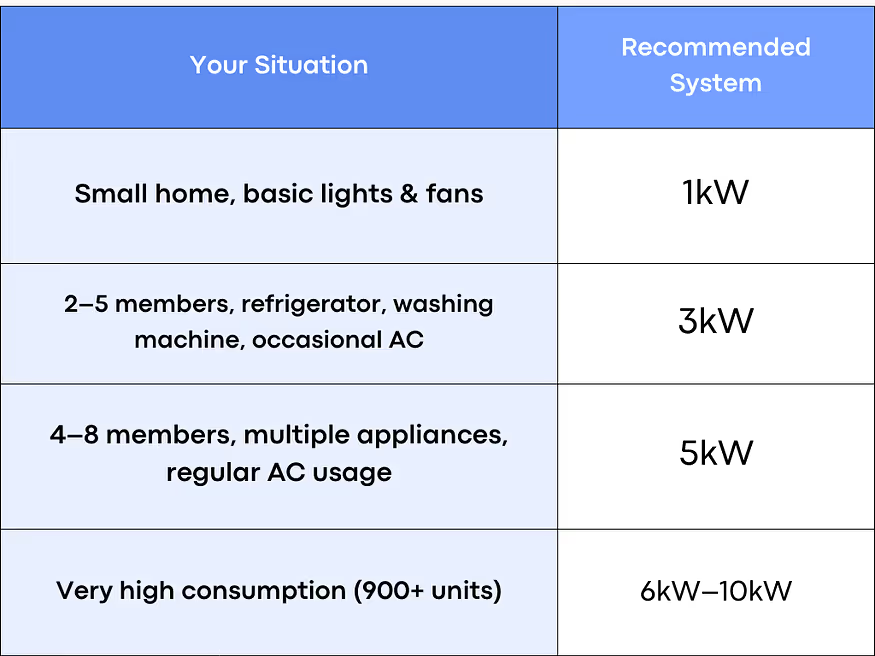
Quick Decision Table — Which One Should You Choose?
Conclusion:
Regardless of the size you choose, one thing remains true:
Solar is one of the smartest financial decisions a homeowner can make today.
With rising electricity costs and attractive government incentives, switching to solar is no longer a luxury but a necessity.
For homeowners who want a smooth, reliable, and transparent installation experience, choosing the right partner matters as much as choosing the right system size. Companies like GharGharSolar offer end-to-end services like site survey, design, installation, documentation, subsidy support, and after-sales assistance making it easier for families to adopt clean, affordable energy without hassle.
If you are still unsure which system is best for you, simply start with your recent electricity bills and appliance usage. A 10-minute analysis can help you accurately determine whether a 1kW, 3kW, or 5kW setup will give you the best long-term value.
Solar is not just about saving money, it’s an investment in energy independence, a cleaner environment, and a future where your home produces its own power. And the best time to begin this journey is today.
Ready to Install Solar? Get a Free Site Survey Today!
Still unsure whether a 1kW, 3kW, or 5kW solar system fits your home?
Let the experts guide you.
GharGharSolar offers:
- Free rooftop inspection
- Accurate load calculation
- Subsidy documentation support
- End-to-end installation
- 24×7 customer assistance
Make the switch to clean, affordable energy today. Book Your Free Site Survey Now

