%20(1).png)


PM Surya Ghar Yojana 2026: Subsidy & Eligibility Guide
PM Surya Ghar Yojana 2026 offers up to ₹78,000 subsidy for 3kW rooftop solar systems. Check eligibility, savings & step-by-step application process.
Electricity bills in India are rising faster than most household budgets. Here’s the surprising part: under the PM Surya Ghar Yojana 2026, you can get up to ₹78,000 in subsidy for installing rooftop solar panels. That’s not a small discount—it can cut your upfront cost nearly in half.
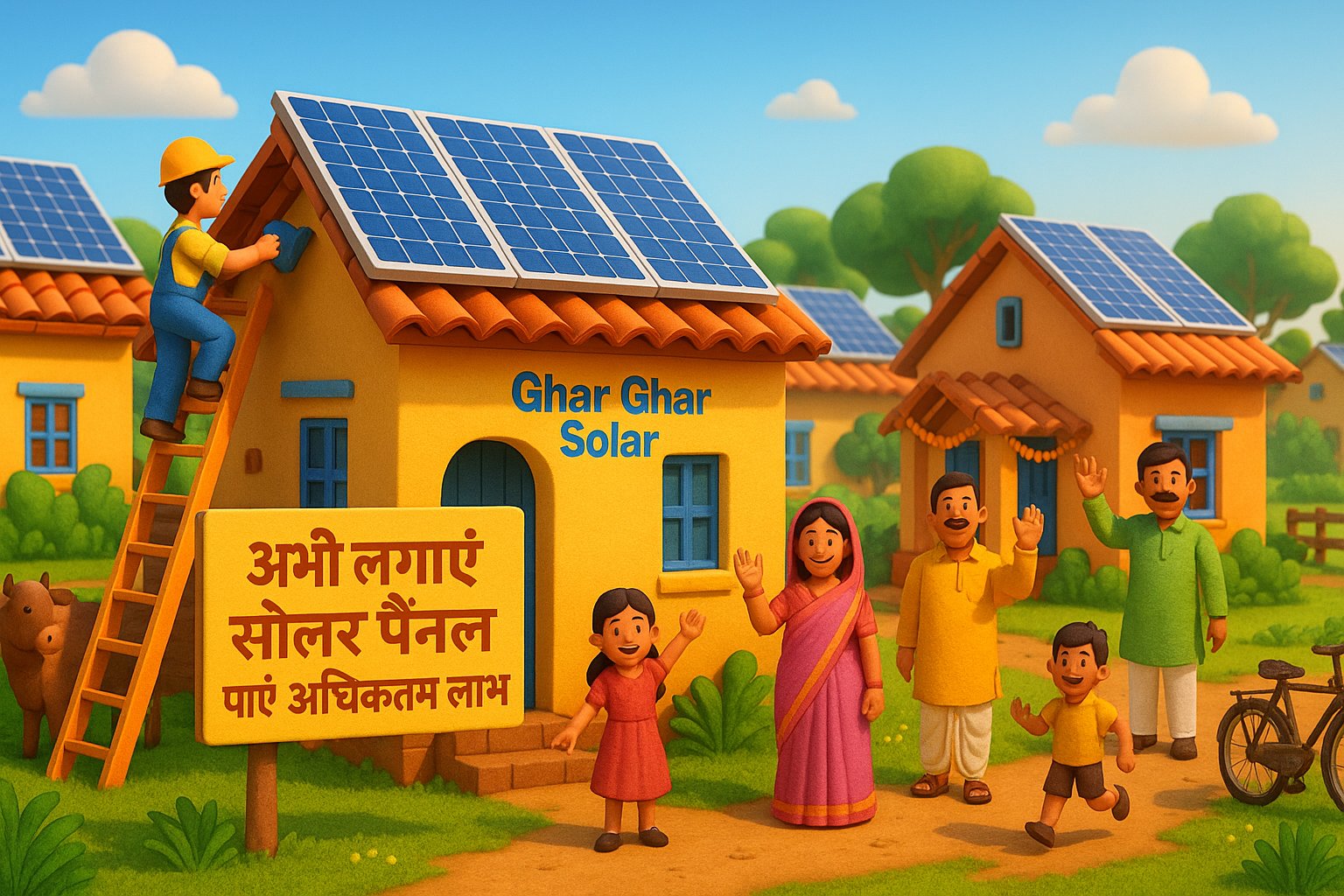
If you’re wondering whether you qualify, how much you can save, and how to apply without paperwork headaches, you’re in the right place. In this guide, we break down the updated subsidy structure, eligibility rules, savings potential, and how residents in Bihar can benefit with support from Ghar Ghar Solar.
Let’s get straight to it.
What Is PM Surya Ghar Yojana 2026 and How Much Subsidy Do You Get?
PM Surya Ghar Yojana 2026 offers up to ₹78,000 subsidy for residential rooftop solar systems up to 3 kW. According to the official scheme structure, the highest subsidy applies to the first 2 kW, with a slightly lower rate for the third kW, and the total support is capped at 3 kW.
The goal is simple: turn Indian homes into mini power plants and reduce monthly power bills. The scheme promotes rooftop solar panels for households, not commercial buildings.
Here’s what makes it attractive:
- Subsidy applicable up to 3 kW capacity
- Funds transferred via Direct Benefit Transfer (DBT)
- Money credited within 30 days of commissioning
- Designed specifically for residential users
Imagine installing a 3 kW system costing around ₹1,50,000. After subsidy, your effective cost can drop dramatically. That changes the economics completely.
And with solar energy India expanding rapidly, this policy is accelerating energy independence at the household level.
Who Is Eligible for PM Surya Ghar Muft Bijli Yojana?
Any Indian homeowner with a valid residential electricity connection and suitable rooftop space can apply. The scheme clearly states that the solar installation must be on a residential property and approved by your local DISCOM.
To qualify, you need:
- A house in your name
- A working electricity connection registered to you
- A strong, sunlit roof
- DISCOM approval for grid connectivity
It sounds straightforward. But here’s where many people slip up.
If your Aadhaar name doesn’t match your electricity bill, your application may stall. If your sanctioned load is low but you apply for a bigger system, it could get rejected.
In our experience working across Bihar, documentation accuracy matters more than people think. That’s why many homeowners choose Ghar Ghar Solar for complete government documentation and approvals support.
Because let’s be honest—who wants delays over paperwork?
How Do You Apply for the Solar Rooftop Subsidy Yojana?
You must register on the national portal, obtain DISCOM approval, install through an approved vendor, and apply for net metering before receiving the subsidy. The process is structured, and each step must follow government guidelines.
Here’s a simplified breakdown:
- Register online using mobile and electricity consumer number
- Submit application for DISCOM technical approval
- Choose a registered vendor for solar installation
- Install rooftop solar panels as per standards
- Apply for net metering and inspection
- Upload bank details to receive subsidy via DBT
Required documents include:
- Aadhaar
- Latest electricity bill
- Property proof
- Cancelled cheque
- Installation certificate
Take Rajesh from Patna as an example. He installed a 3 kW system generating around 360 units per month. At ₹8 per unit, he saves nearly ₹2,880 monthly—over ₹34,000 annually. His system could recover its cost within 2–3 years.
That’s real money staying in your pocket.
How Much Can You Actually Save with Rooftop Solar?
A 3 kW rooftop solar system can save around ₹34,000 per year if you consume 360 units monthly at ₹8 per unit. Combined with the ₹78,000 subsidy, the payback period typically falls between 2 to 3 years.
Let’s break it down clearly:
- Monthly generation: ~360 units
- Electricity rate: ₹8/unit
- Monthly savings: ₹2,880
- Annual savings: ₹34,560
After payback, you enjoy decades of low-cost electricity. That’s energy independence in action.
While grid electricity remains unpredictable in cost, solar energy systems offer stable long-term savings. And with EMI financing options available, many families start saving from day one.
Isn’t it better to invest in your own power rather than “rent” electricity forever?
At Ghar Ghar Solar, we also offer a free solar calculator to estimate your custom savings based on your Bihar location and usage.
Why 2026 Is the Best Time to Install Rooftop Solar Panels
2026 combines high government subsidies, better solar panel efficiency, and faster approval processes—making it one of the best times to switch. Policies are active, technology is mature, and installation timelines are shorter than ever.
Here’s what’s working in your favor:
- Strong policy backing under PM Surya Ghar Yojana
- Improved solar panel efficiency
- Better net metering frameworks
- Increased awareness of sustainability
While waiting might seem harmless, every delayed month means another full electricity bill paid to the utility company.
From what we’ve seen in Bihar, early adopters are already locking in savings and boosting property value. Homes with rooftop solar panels often attract higher resale interest.
The bottom line? The ecosystem is ready. The incentives are live. The opportunity is now.
Frequently Asked Questions
How much subsidy is available under PM Surya Ghar Yojana 2026?
The scheme offers up to ₹78,000 subsidy for residential rooftop solar systems up to 3 kW. The highest subsidy applies to the first 2 kW, with a slightly reduced rate for the third kW.
How long does it take to receive the solar subsidy?
Once your system is installed, inspected, and commissioned, the subsidy is transferred via Direct Benefit Transfer within 30 days to your registered bank account.
Can businesses apply for PM Surya Ghar Yojana?
No, the scheme is strictly for residential properties. Commercial establishments must explore other solar subsidy programs or state-level policies.
What happens if I don’t apply for net metering?
Without net metering approval, you won’t receive credit for excess electricity sent to the grid. That reduces your total savings and may affect subsidy processing.
Ready to Make the Switch to Solar?
If you’re in Bihar and considering rooftop solar, this is your moment.
At Ghar Ghar Solar, we provide:
- End-to-end solar installation
- Complete government documentation support
- Assistance with DISCOM approvals
- Energy storage solutions
- EMI financing options
As local experts in solar energy India, we understand Bihar’s policies, grid conditions, and rooftop challenges. That means faster approvals and smoother installations for you.
Why navigate paperwork alone when experts can handle it?
Contact Ghar Ghar Solar today for a free consultation and site assessment. Let’s calculate your savings and help you claim your rightful subsidy.
Conclusion
The PM Surya Ghar Yojana 2026 is transforming residential solar adoption across India. Here’s what you should remember:
- ✅ Up to ₹78,000 subsidy available
- ✅ 2–3 year typical payback period
- ✅ Direct bank transfer within 30 days
- ✅ Significant long-term savings and sustainability benefits
Rooftop solar panels aren’t just about cutting power bills. They’re about energy independence, sustainability, and financial control.
You can keep paying rising electricity bills—or you can generate your own power.
The choice is yours. And if you’re ready, Ghar Ghar Solar is here to guide you every step of the way.

